The Translational Research and Professional Leadership Centre (TPLC), GEC Barton Hill, organized a two-day training program titled “Getting Started with AI: Practical Tools for Everyday Professional Use” on 26th and 27th June 2025 at Unnathi Hall, TPLC. The program aimed to introduce professionals to Artificial Intelligence tools that can improve productivity, communication, and digital practices.
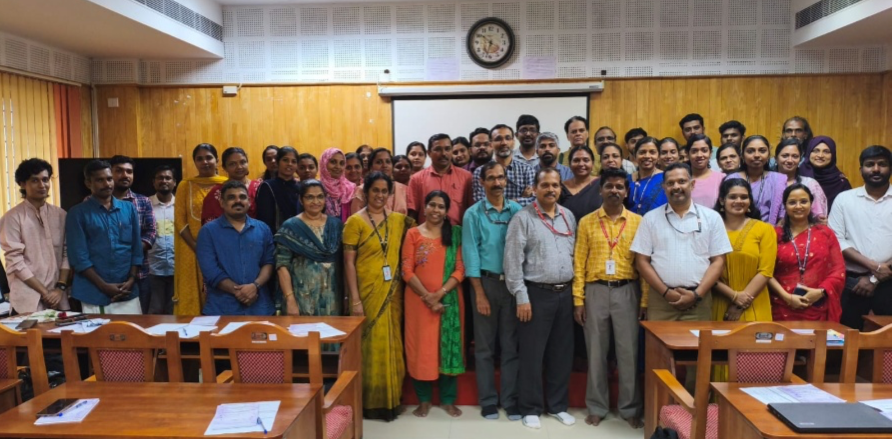 The training was inaugurated by Dr. Jayaprakash P, Director of Technical Education (in charge) in the presence of academic leaders and faculty members. A total of 41 participants, including officers from government departments such as IDRB, KWA, GWD, PWD, Irrigation, along with an advocate and research scholars, attended the program.
The sessions covered topics such as Introduction to AI, AI assistants like ChatGPT, AI for professional writing, responsible use of AI, productivity tools, visual communication using AI, and hands-on workshops where participants applied AI tools to real-world tasks.
The program received excellent feedback, with most participants appreciating the practical demonstrations and hands-on learning. The training improved participants’ understanding of AI tools and encouraged the adoption of AI for professional and organizational productivity.
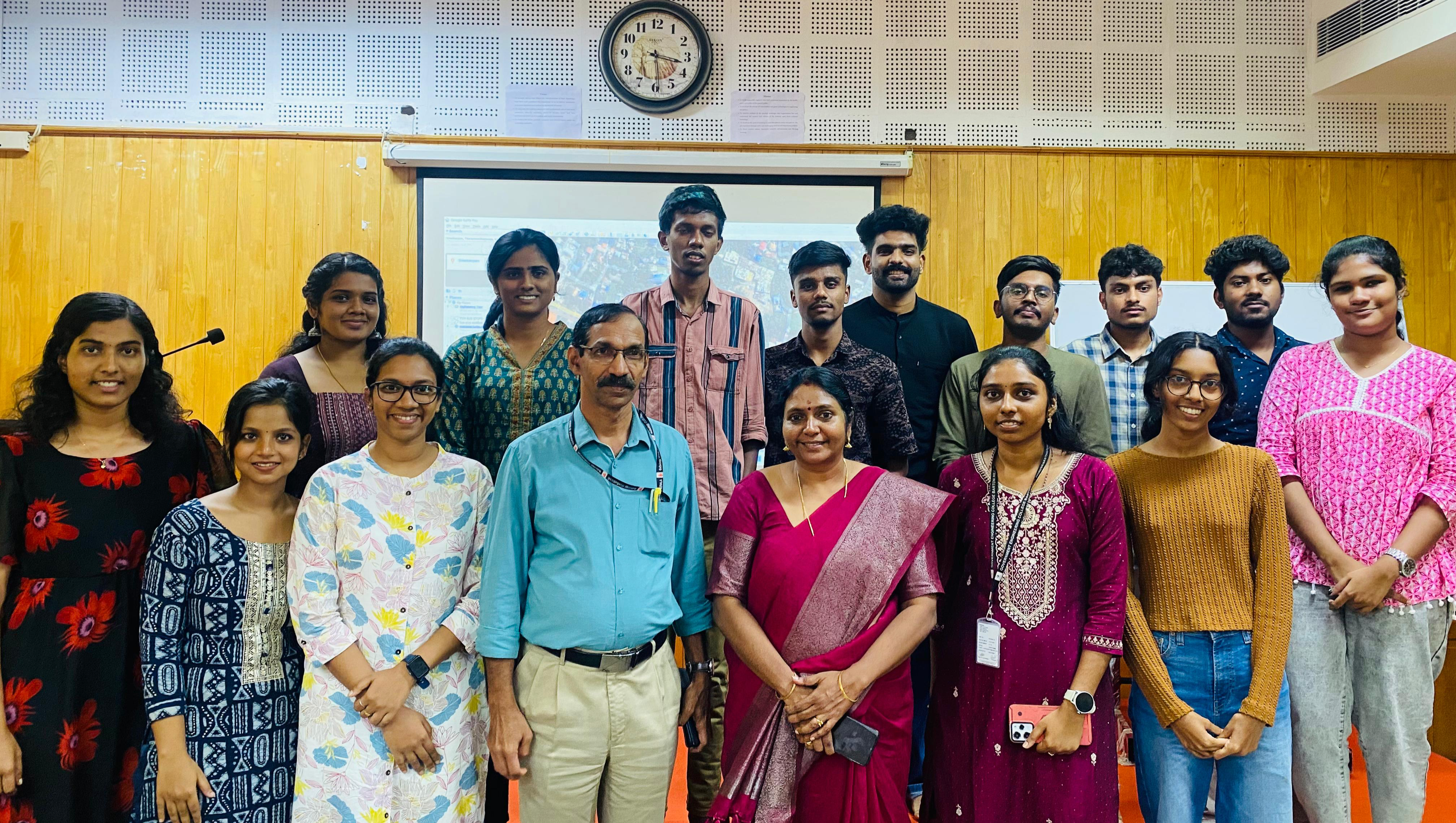 The internship program titled “GIS, Remote Sensing & IoT Applications for Smart Cities” was conducted from 16–28 June 2025 at Unnathi Hall, TPLC, Government Engineering College Barton Hill. The program aimed to provide B.Tech final-year students with practical knowledge in GIS, Remote Sensing, and IoT technologies used in smart city development.
Participants attended technical sessions and hands-on training on tools such as QGIS, Google Earth Pro, and Landsat satellite data. They learned concepts including georeferencing, image classification, land use analysis, buffering, and network analysis. Experts also delivered sessions on Smart City infrastructure and IoT architecture.
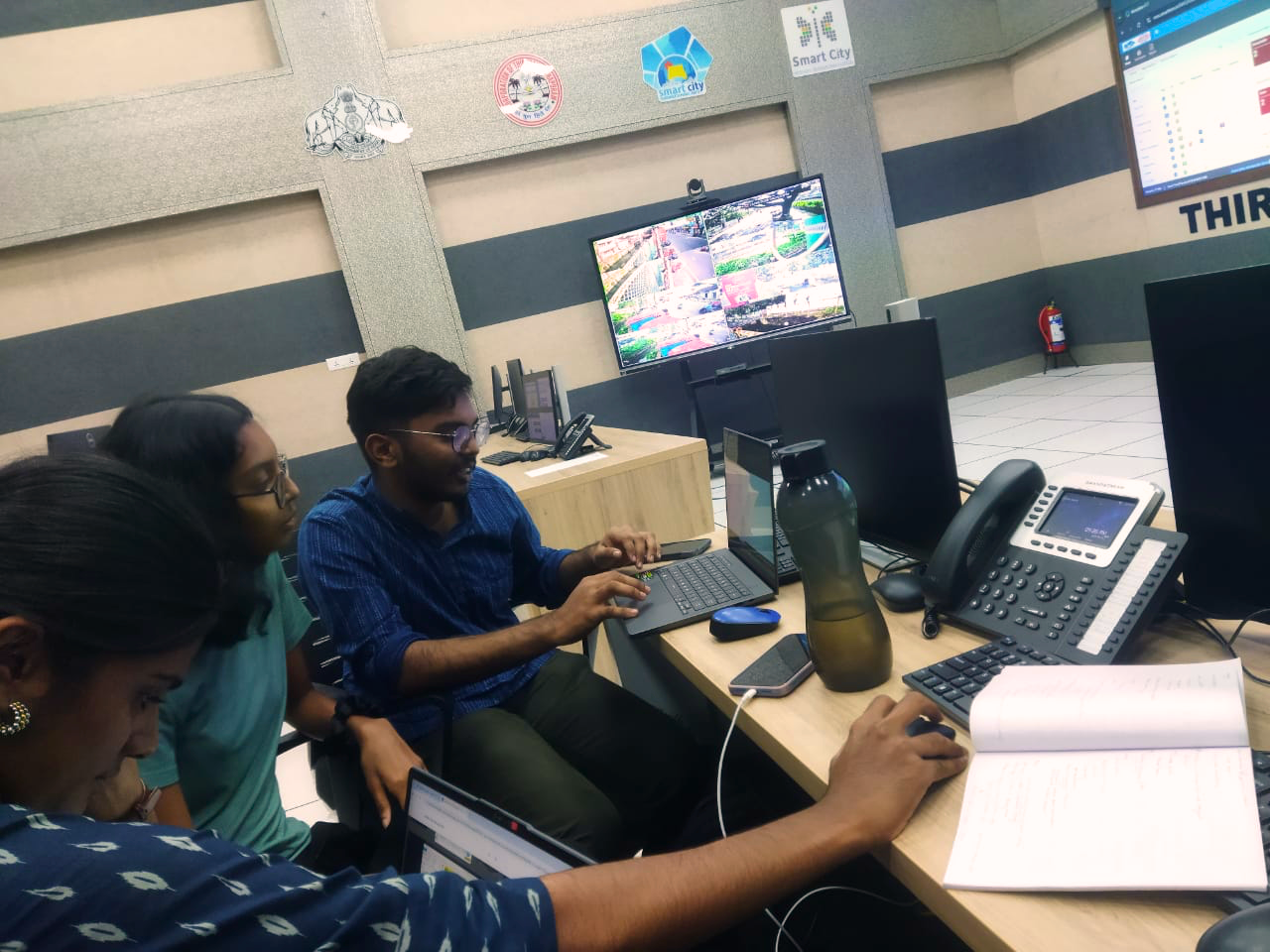 During the final phase, students worked at Smart City Thiruvananthapuram to develop a Smart Waste Management System using GIS mapping, QR code tracking, and a web-based monitoring platform. The project demonstrated real-time waste collection monitoring and route optimization for workers.
The internship concluded with project presentations, certificate distribution, and feedback sessions, providing students with valuable practical exposure to geospatial technologies and smart city applications.
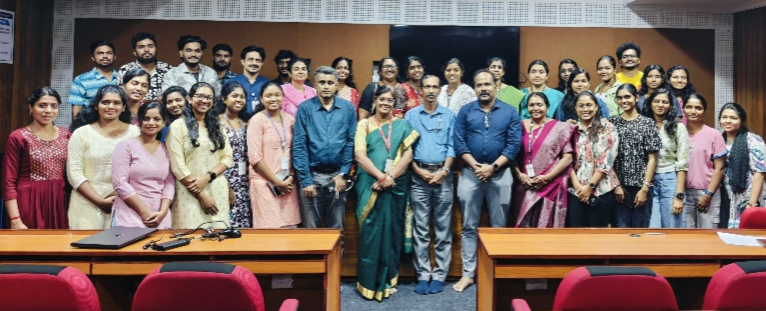 The One-Day Workshop on “Digital Twins and Geospatial Intelligence for Smarter Cities” was conducted on 10th November 2025 at Zoom IT Hall, Government Engineering College Barton Hill, Thiruvananthapuram under the PRAGATI Centre. The programme aimed to provide participants with insights into the role of digital twin technology and geospatial intelligence in smart city planning and urban development. Around 60 participants, including faculty members and students, attended the workshop, making it an interactive and informative event.
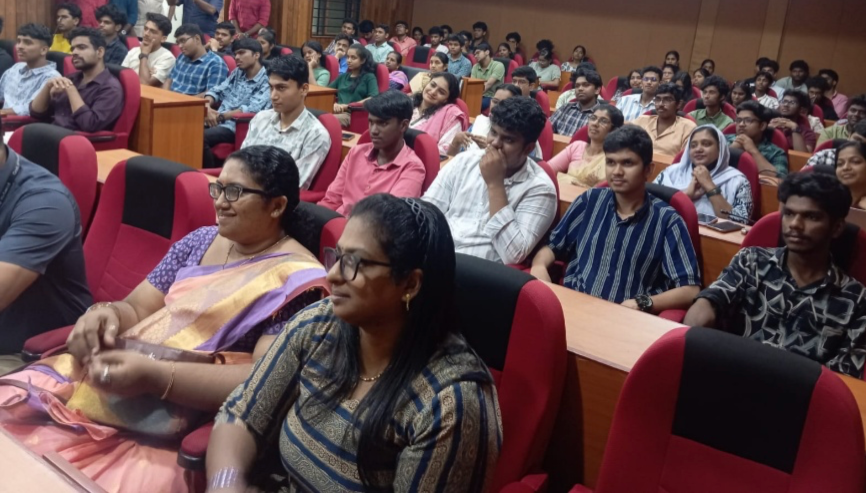 National Education Day was celebrated on 11 November 2025 at Zoom IT Hall, Government Engineering College Barton Hill, Thiruvananthapuram, jointly organized by Translational Research and Professional Leadership Centre (TPLC) and the Institution’s Innovation Council (IIC). The programme featured an inspiring talk by Shri K. Jayakumar, IAS (Retd.), Former Director of the Institute of Management in Government (IMG) as the Chief Guest. Around 82 participants, including faculty members and students, attended the session, making the event informative and engaging.
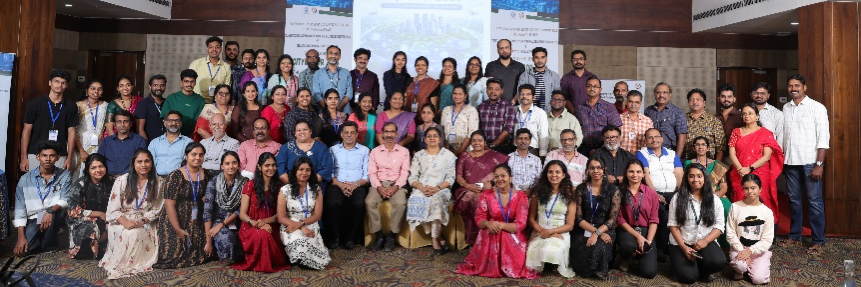 The CityMirror 2026 national seminar was held on February 13–14, 2026 , at Hotel Dimora, Thiruvananthapuram. Keynote and administrative leaders, including the Principal Secretary of Higher Education, emphasized that the nation's rapid urban transformation requires a "powerful convergence" of engineering, data science, and policy to enable evidence-based, sustainable planning. This sentiment was echoed by the Director of Technical Education, who viewed the integration of digital twin technology as a "transformative phase" in engineering that is essential for India’s move toward smart cities. Speakers from Smart City Thiruvananthapuram and the Board of Governors further noted that AI-driven analytics and geospatial intelligence are no longer merely innovations but absolute necessities for future-ready city management and resilient infrastructure. Finally, representatives from the IT Department, TPLC, and industry partners highlighted that such platforms are vital for translating academic research into deployable, real-world solutions through interdisciplinary collaboration.
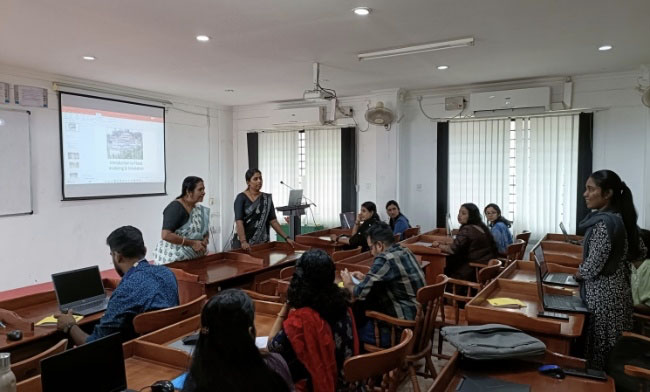 A training program titled "Flood Modeling and Simulation Using HEC-RAS" was successfully organized from October 14th to 18th at Unnathi Hall, by the TPLC, Government Engineering College Barton Hill (GECBH). The program was designed to equip civil engineering and GIS professionals, as well as students, with essential skills and knowledge in flood modeling and simulation using HEC-RAS software. The training program saw enthusiastic participation from various institutions and organizations, including students and professionals from College of Engineering Trivandrum (CET), Government Engineering College Barton Hill (GECBH), Mar Baselios College of Engineering and Technology (MBCET), and officials from Irrigation Design and Research Board (IDRB) and Smart City Thiruvananthapuram Limited (SMTL).
A memorandum of understanding between IIT Madras and TPLC has been signed on academic and research activities on the following categories on December 16, 2016. The word, education, is derived from the Latin word educare, in turn related to the word, educere, which means “to lead forth”. We may also interpret this word to mean inner development leading to outer progress and fulfilment of the individuals concerned and of society at large. This course emphasizes the importance of expanding the scope of this ‘development’ to the higher goals of education through self-awareness and inner transformation. Can a student aspire to be a ‘good professional’ or a ‘good citizen’, without also aspiring to be a good human being? Likewise, can one be a ‘good teacher’ without being a good human being? The gurus of our past were masters, not just in narrow academic fields, but also in character, compassion and wisdom. The word, guru, in original Sanskrit, means ‘dispeller of darkness’. Here the darkness refers not just to some subject knowledge, but to fundamental ignorance, which was identified as the root cause for human suffering. If today, despite all the signs of technological development, we are also faced with a stark ‘loss of values’ in society, and live in an ‘age of anxiety’, and unsustainable development, the educators must take some responsibility for this. By habit, we have trained ourselves to look outward. Self-awareness is a powerful means of dis-covering one’s true nature and potential. Realizing that potential in all its dimensions should perhaps be the ultimate objective of education. The higher goals of education include developing multiple parts of our being, not just cognitive intelligence, but also the physical, life force, emotion and deeper self. Traditionally, ‘teacher training’ programmes focus on making the teaching-learning process more interesting and effective through various techniques. This course deals with the other aspects, relating to the larger vision of education that is generally missed out. The sessions will include not only ‘theory’ (intellectual understanding), but also ‘laboratory’ sessions (experiential inner process for transformation and meditation). The approach will be broadly universal and exploratory. The course will also explore spirituality in work, based on selected teachings from ancient Indian wisdom, including The Bhagavad Gita and portions of Integral Yoga. This course is adapted from the course contents of SAHGE (Self-Awareness and Higher Goals in Education), a 5 day short-term course conducted yearly in IIT Madras.
Life skills is a term used to describe a set of basic skills acquired through learning and/or direct life experience that enable individuals and groups to effectively handle issues and problems commonly encountered in daily life. The sessions include creativity, critical thinking, problem-solving, decision-making, the ability to communicate and collaborate, along with personal and social responsibility that contribute to good citizenship – all essential skills for success in the 21st century, both for healthy societies and for successful and employable individuals which was handled by eminent resource persons.
An important factor that contributes to successful organizational transformation is leadership. Transformational leaders bring such changes and help their organizations to stay competitive. The core of transformational leadership is Universal. The transformational leaders "engage with others in such a way that the leaders and followers raise one another to higher levels of motivation & morality". Transformational leaders create followers by framing a vision for the future that appears to be reachable, attractive and engaging.
Course Contents are Leadership Journey, Essence of Transformational Leadership, Mind Dynamics of Personal Excellence, 5 practices of Exemplary leadership, Creating high performance teams, Champions for changeLeadership in a Digital Age, Leadership resilience in a VUCA world, Practice of leading change
In this developing era of technological advancement, an engineer should be equipped with modern tools of geospatial analysis which strengthens the design, planning and operation activities of any project. Satellite data coupled with GIS tools provide attractive options for problem solving and decision making in geospatial analysis. WebGIS is an advanced form of Geospatial Information System available on the web platform. WebGIS brings GIS into the hands of the people.
Open source tools besides being free, gives the advantage of “extensibility” feature. This course will feature Python and Raspberry pi as the data science tools for the future. This course will cover Python as a powerful scripting language for developers. This includes learning fundamental programming concepts including data structures, networked application program interfaces and databases using Python. This course will also feature raspberry pi which are used in many applications like Media streamer, Arcade machine, Tablet computer, Home automation, Internet radio, Controlling robots, Cosmic Computer, Hunting for meteorites etc.
There are a host of reasons technical, aesthetic, psychological, educational, and practical for choosing LaTeX as your typesetting environment. Because LaTeX is an open-source, it is both free to you, and supported by a vibrant community of users who are constantly improving and adding to its functionality. LaTeX allows you to write from your sources, and build highly modular documents. LaTeX and its variants were designed with the needs of mathematicians, scientists, and engineers in mind and is excellent at handling mathematical expressions, equations, tables, figures, and the like. Latex is most commonly used to create documents for academia, such as academic journals.
Project management training will teach you the importance of time and setting of goals and objectives thereby improve your chances of achieving the desired result. You will gain a fresh perspective on your project, and how it fits with your business strategy making great use of your time. You will set the scope, schedule and budget accurately from the start. You will know the resources in the form of time, money or manpower and ensure their efficient use.
Course Contents are Concepts of Project Management, Basics of Project Scheduling, Resources, over allocation concepts, Resource analysis and levelling, EVM Calculation, Reports.